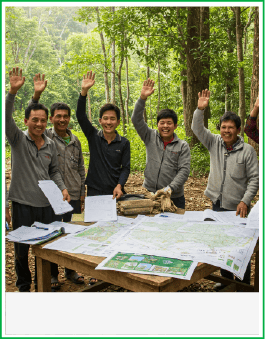
Local communities play an important role in forest management. Before any harvesting begins, communities living near forest areas are consulted to assess how logging activities might affect their livelihood. These consultations continue throughout the operation, with measures in place to minimise any negative impact.
This approach ensures that forest activities are:
Sustainable
Economically viable
Environmentally sound
Socially acceptable
Forest Managers are responsible for facilitating these engagements and ensuring that community voices are heard and respected in the process.
Developing Certification Standards for Sustainability
Malaysia began its journey towards forest certification in 1994, developing its own set of criteria and indicators for Sustainable Forest Management (SFM) based on international standards from the International Tropical Timber Organization (ITTO).
This led to the creation of the Malaysian Criteria and Indicators (MC&I) for Forest Management Certification in Peninsular Malaysia, which evolved from:
These standards form the basis of Malaysia’s national forest certification system.
Training for Effective Implementation
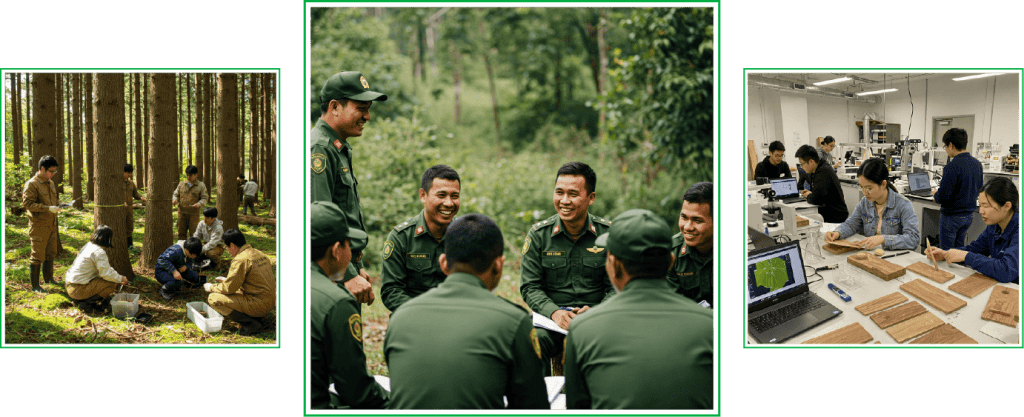
The success of any certification system depends on the people implementing it. That’s why the Forestry Department of Malaysia, both at the Federal and State levels, regularly conducts:
Hands-on and on-site practical courses before operations begin
Training for Forest Rangers, Foresters, and logging operators
Specialised programmes at the Forest Training Institute (FORTRAIN)
To ensure consistency and quality, about 1% of the annual emolument budget is allocated for training and capacity building.